Where Reliability, Efficiency & Scale Are Engineered Long Before Ground Is Broken.
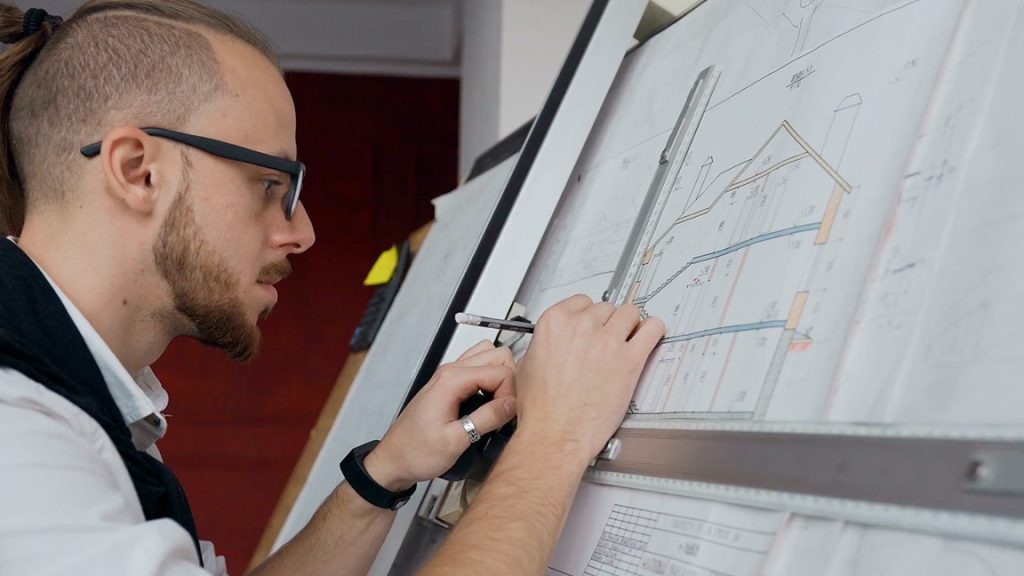
Design determines how a data center will perform for the next twenty years. Every megawatt of IT load, every redundancy path, every degree of cooling and every point of PUE is engineered on the drawing board — balancing uptime, capital cost, energy efficiency, sustainability and speed-to-market against surging, AI-driven demand.
It’s a deeply multidisciplinary effort, and a flaw carried from design into construction becomes exponentially more expensive to fix once built. Our network runs across the entire design ecosystem — from the leaders setting the technical vision to the engineers and modelers who detail every system — and we know where the best of them are.

Design Leadership & Management
VPs of Design, Design Directors and Heads of Engineering own the technical vision and design standards.
Principal and Lead Engineers and Design Managers govern the Basis of Design (BOD) and Owner’s Project Requirements (OPR), coordinate multidisciplinary teams, manage external design consultants, and hold the schedule and quality of every package from concept through Issued-for-Construction (IFC).
The Design Disciplines
A data center is engineered by specialists working in parallel:
- Electrical Design — Electrical Design Engineers architect the power chain: single-line and riser diagrams, medium- and low-voltage distribution, UPS and generator topologies, load calculations, and short-circuit, coordination and arc-flash studies — engineered to redundancy topologies (N+1, 2N, 2N+1, distributed/block redundancy) and Uptime Institute Tier standards.
- Mechanical & Cooling Design — Mechanical and HVAC Design Engineers shape the thermal strategy: chilled-water and air-cooled systems, CRAC/CRAH and CDU selection, economizers and free cooling, hot/cold-aisle containment, and increasingly rear-door heat exchangers, direct-to-chip liquid cooling and immersion for high-density, AI-driven loads — validated with CFD (computational fluid dynamics) modeling and tuned to PUE and WUE targets.
- Architectural & Structural Design — Architects and Structural Engineers resolve the building envelope, data hall layout, white and gray space, floor loading and seismic requirements — increasingly around standardized, modular templates.
- Fire, Life-Safety & Low-Voltage Design — Fire/Life-Safety Engineers and ICT/Telecom Designers detail VESDA aspirating detection, clean-agent suppression, structured cabling, cable pathways and the meet-me room (MMR).
- Controls Design — Controls and BMS Design Engineers specify the BMS, EPMS and DCIM architecture that will ultimately monitor and run the live facility.
The Design Stages
Design matures through defined gates — Concept and feasibility (site capacity studies, block diagrams, MW planning), Schematic Design (SD), Design Development (DD), and Construction Documents (CD) issued for construction (IFC) — followed by design support through the build, reviewing RFIs and submittals and validating as-builts.
Senior Design Engineers, Design Engineers and graduate Engineers-in-Training (EITs) progress the detail at every stage.
BIM, VDC & Digital Coordination
BIM/VDC Managers, Coordinators and Revit/CAD Technicians build the federated model to a defined Level of Development (LOD), running clash detection, 4D/5D coordination and, increasingly, digital-twin models.
This is the backbone of the standardized reference designs and modular/DfMA delivery that let hyperscale programs replicate a proven design across many sites at speed.
Standards, Sustainability & Assurance
Design is governed by code and standard — NEC/NFPA, ASHRAE TC 9.9, IEEE, TIA-942 and Uptime Institute — with Tier Certification of Design Documents (TCDD), independent peer reviews, and constructability and value-engineering reviews de-risking the scheme.
Sustainability specialists drive energy efficiency, embodied-carbon reduction, water strategy and LEED/net-zero goals.
The best data center designers are rarely on the open market.
Through an established network built across the design community, we know who they are, what they've delivered, and how to reach them — identifying forward-thinking specialists with deep technical knowledge and full command of industry standards, and rigorously assessing their ability to innovate without compromising reliability, so the people we bring to the table can design facilities that meet today's demands, anticipate tomorrow's technology, and can be built, commissioned and operated with confidence.
Other Sectors
Sales
- Business Development, Client Relations Account Management, Go-to-Market Strategy
Financial
- Entitlements Acquisitions, ESG, Site Selection
Power & Utilities
- Business Development, Client Relations Account Management, Go-to-Market Strategy
Development
- Entitlements Acquisitions, ESG, Site Selection
Construction
- Commissioning, Health & Safety, Pre-Construction Field Operations, Project Management
Operations
- Asset Management Performance Optimisation, Lifecycle Management, Operations & Maintenance